

Focus can feel like trying to hold a bar of soap in the shower. The tighter you squeeze, the faster it shoots away. You sit down with good intentions, open your laptop, and suddenly you are reorganizing your bookmarks, reading about the history of staplers, or debating whether you should buy a plant.
Most advice about concentration is well-meaning but vague: “Try harder,” “remove distractions,” “just be present.” Helpful, sure, but it is like telling someone to “run better” without showing them their stride. Real-time brain feedback changes that. It adds a dashboard to something that normally feels invisible, giving you signals you can practice with, just like a heart-rate monitor helps you train cardio.
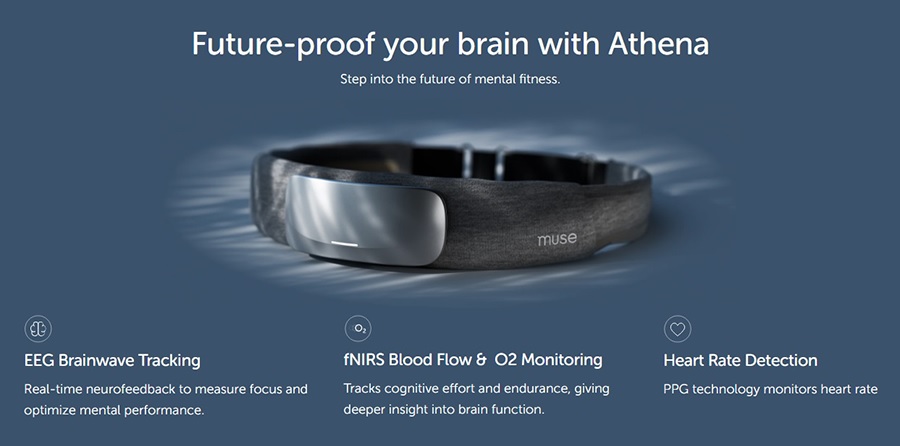
Here we explain what real-time brain feedback is, why it can strengthen focus, and how to use it responsibly without turning your attention into a constant performance review. Along the way, you will also see how tools that track brain activity and body signals can support attention training, including devices like the Muse headband, which some people use to get gentle feedback during meditation and focus practice.
What Real-Time Brain Feedback Actually Means
Real-time brain feedback is a simple idea with a science-heavy name: you get immediate information about patterns connected to your mental state, and you use that information to adjust what you are doing. The “feedback” part is key. Your brain does something, you see or hear a cue, you respond, and your brain learns from the loop.
EEG In Plain English
Most consumer brain-feedback tools rely on EEG, short for electroencephalography. EEG measures tiny electrical signals on the scalp that reflect the combined activity of large groups of neurons. It does not read thoughts, and it cannot tell whether you are thinking about tacos or tax forms. What it can do is detect broader patterns that tend to show up when you are relaxed, alert, drowsy, or mentally busy.
Those patterns are often described as “brainwaves,” which are grouped into frequency bands (like alpha, beta, theta). The labels can sound mystical, but they are just categories for different rhythm speeds. The important point is not memorizing bands, it is understanding that your brain’s activity shifts with your state, and those shifts can be trained.
Feedback Loops Beat Guesswork
Without feedback, you are often guessing whether a technique is helping. You try deep breathing, but you cannot tell if you are getting calmer or just sitting still. You try to concentrate, but you only notice you were distracted after ten minutes have evaporated.
Real-time cues shorten that gap. Instead of discovering you lost focus after the fact, you get a nudge while it is happening. That is valuable because attention is a skill built through repetition, and repetition works best when you can correct the form quickly.
Why Feedback Can Improve Focus Over Time
Focus is not a single switch you flip on. It is a mix of abilities: staying on task, noticing distraction quickly, returning to the task, and managing the stress that makes your mind bolt for the nearest escape hatch. Real-time feedback can support each of those pieces.
It Trains Attention Like A Muscle
When you lift weights, you are not only building strength. You are learning movement patterns, improving coordination, and getting better at sensing what your body is doing. Focus training works similarly. You are learning to recognize the early signs of drift and to recover faster.
Feedback helps because it creates clear “reps.” A rep is: mind wanders, cue changes, you notice, you come back. Over time, your brain becomes quicker at the noticing part. That is often the hidden bottleneck. People do not fail at focusing because they never return, they fail because they do not realize they left.
It Strengthens Metacognition
Metacognition is your ability to notice what your mind is doing. Think of it as a friendly lifeguard watching your thoughts swim around. Strong metacognition supports better focus because you can detect when you are slipping into autopilot, rumination, or “half-working, half-scrolling.”
Real-time brain feedback can improve metacognition by making subtle shifts more obvious. Over time, you may not need the device as much because you begin to recognize the feeling of distraction earlier, the same way a musician learns to hear when a note is slightly off.
It Reduces The Stress-Focus Tug-Of-War
Stress is a common focus thief. When you feel pressure, your brain prioritizes threat detection and rapid switching. That is great if you are avoiding a car crash, less great if you are trying to read a dense report.
Many brain-feedback systems pair brain cues with other signals like breathing rhythm, heart rate, or movement. Training calmer physiology can make sustained attention feel less like wrestling a bear. You still have distractions, but they do not hook you as easily.
Practical Ways To Use Brain Feedback For Better Concentration
The point of brain feedback is not to chase perfect numbers. It is to build skills you can use away from the screen, in the real world, when your phone is buzzing and your inbox is multiplying like rabbits.
Start With Short, Repeatable Sessions
If you are new to feedback-based training, start small. Five to ten minutes is enough to create meaningful practice. Consistency matters more than duration because your brain learns through frequent, manageable exposure.
Try this simple structure:
- One minute: Sit comfortably and notice how scattered or steady you feel.
- Three to eight minutes: Use a focus anchor (breath, sound, or a visual point) and respond to feedback cues by gently returning.
- One minute: Reflect on what helped and what made you drift.
Pair Feedback With A Clear Focus Anchor
Feedback works best when your brain knows what you are aiming for. Pick one anchor per session. Common anchors include:
- Breath: feel the air at the nostrils or the rise of the belly.
- Sound: listen to ambient noise without labeling it.
- Visual target: softly gaze at a point on the wall.
The anchor is not the goal, it is the training rail. When feedback suggests you are drifting, you return to the anchor like placing your hand back on the railing while walking down stairs.
Use “Return Speed” As Your Main Metric
People often assume progress means “never getting distracted.” That is like assuming progress in fitness means “never getting tired.” A better metric is return speed: how quickly you notice drift and come back.
Some users find it helpful to keep a simple log after sessions:
- What distracted me most today?
- What helped me return?
- Did I feel calmer or more keyed up afterward?
This reflection makes training practical. It connects your practice to your day, so you are not only getting better at sitting still, you are getting better at focusing in meetings, studying, or writing.
Try “Focus Sprints” Outside Training
Once you have a little practice, transfer it to work sessions. Use 10 to 25 minute focus sprints with a single task, followed by a short break. During the sprint, you apply the same skill: notice drift, return gently, repeat. If you have done feedback training, you may find you catch drift sooner even without cues.
A useful twist is to start the sprint with 60 seconds of calm breathing. It is like wiping your shoes before walking onto a clean floor. You are preparing your nervous system for steadier attention.
What To Look For In A Feedback Tool
If you are considering real-time feedback training, it helps to know what features matter. You do not need a lab setup, but you do want something that supports practice rather than distractions.
Comfort And Consistency
If a headset is uncomfortable, you will not use it. Comfort affects consistency, and consistency is where learning happens. Look for designs that sit securely without feeling like a head clamp.
Clear, Simple Cues
Some tools use audio cues, others use visual prompts, and some mix both. Simpler is often better, especially early on. You want cues that help you return to your anchor, not cues that pull you into overthinking.
Integration With Breath And Body Signals
Focus is influenced by physiology. Tools that incorporate breathing, heart rate, or movement can help you notice when your body is quietly steering your attention. As one example, the Muse headband is often discussed in this context because it pairs brain-sensing with guidance cues that encourage steadier attention during mindfulness practice.